
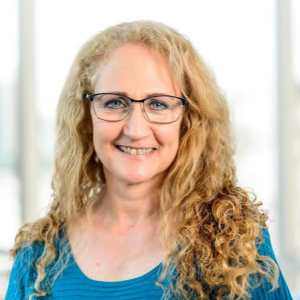
Jo Handelsman
Tiny Earth Founder
Director of the Wisconsin Institute for Discovery
Vilas Research Professor
Howard Hughes Medical Institute Professor
University of Wisconsin-Madison
About
In 2012 while at Yale University, Jo created an undergraduate course titled “From Microbes to Molecules” with the goals of strengthening STEM education by engaging first-year college students in authentic research, addressing the antibiotic crisis, and sharing her passion for soil microbes. Jo’s vision — crowdsourcing antibiotic discovery — transformed the six-student introductory biology course into an international network of instructors and students across the world collaborating to discover new antibiotics, a project named Tiny Earth.
Jo is renowned for her research on soil microbial communities. She was one of the pioneers of functional metagenomics, an approach to studying the functional diversity of unculturable bacteria in environmental samples. She is also lauded internationally for her efforts to improve science education and participation of women and minorities in science.
Jo assumed the role of Director of the Wisconsin Institute for Discovery in February 2017 at the University of Wisconsin-Madison, where she is also a Vilas Research Professor and Howard Hughes Medical Institute (HHMI) Professor in the Department of Plant Pathology. In her previous role, Jo served as the Associate Director for Science at the White House Office of Science and Technology Policy (OSTP). She was appointed to this role by President Obama and confirmed by the Senate in June of 2014. Prior to joining OSTP, she was the Frederick Phineas Rose Professor in the Department of Molecular, Cellular, and Developmental Biology at Yale University. She received her Ph.D. in Molecular Biology from the University of Wisconsin-Madison in 1984, and she served on the faculty at the University of Wisconsin-Madison from 1985 until moving to Yale in 2010.
Jo’s leadership led to her appointment as the first President of the Rosalind Franklin Society; her appointment as President of the American Society for Microbiology in 2013; her service on the National Academies’ panel that wrote the 2006 report, “Beyond Bias and Barriers: Fulfilling the Potential of Women in Academic Science and Engineering;” her role as co-chair of the President’s Council of Advisors on Science and Technology (PCAST) working group that developed the 2012 report, “Engage to Excel,” which contained recommendations to the President to strengthen STEM education to meet the workforce needs of the next decade in the United States; and her selection by President Obama to receive the Presidential Award for Excellence in Science, Mathematics, and Engineering Mentoring.