
Projects
Tiny Earth has worked on a number of projects that advance the mission of increasing access to scientific education.
Current Projects
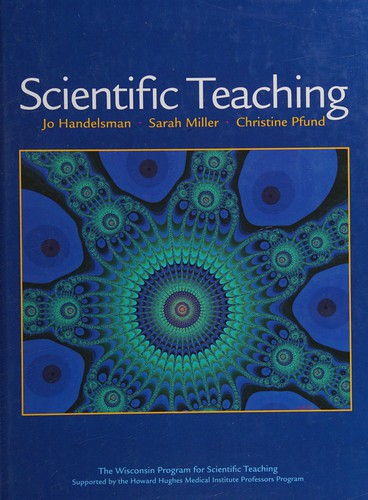
Scientific Teaching
Scientific Teaching provides college instructors with a guide to using evidence-based practices for designing STEM courses that engage college students in learning how to do science. The term “scientific teaching” and the book were coined two decades ago at the University of Wisconsin–Madison.
Publications:
Scientific Teaching (2nd edition, coming summer 2026)
Scientific Teaching Course (Free, self-guided online course, 2025)
Handelsman, J., Miller, S., & Pfund C. (2007). Scientific Teaching (1st ed.). W.H. Freeman.
Handelsman, J., Ebert-May, D., Beichner, R., Bruns, P., Chang, A., DeHaan, R., Gentile, J., Lauffer, S., Stewart, J., Tilghman, S. M., & Wood, W. B. (2004). Scientific teaching. Science, 304(5670), 521–522. https://doi.org/10.1126/science.1096022
Funding support for Scientific Teaching comes from:
- Howard Hughes Medical Institute
- The William + Flora Hewlett Foundation
Tiny Earth Student Research Guide
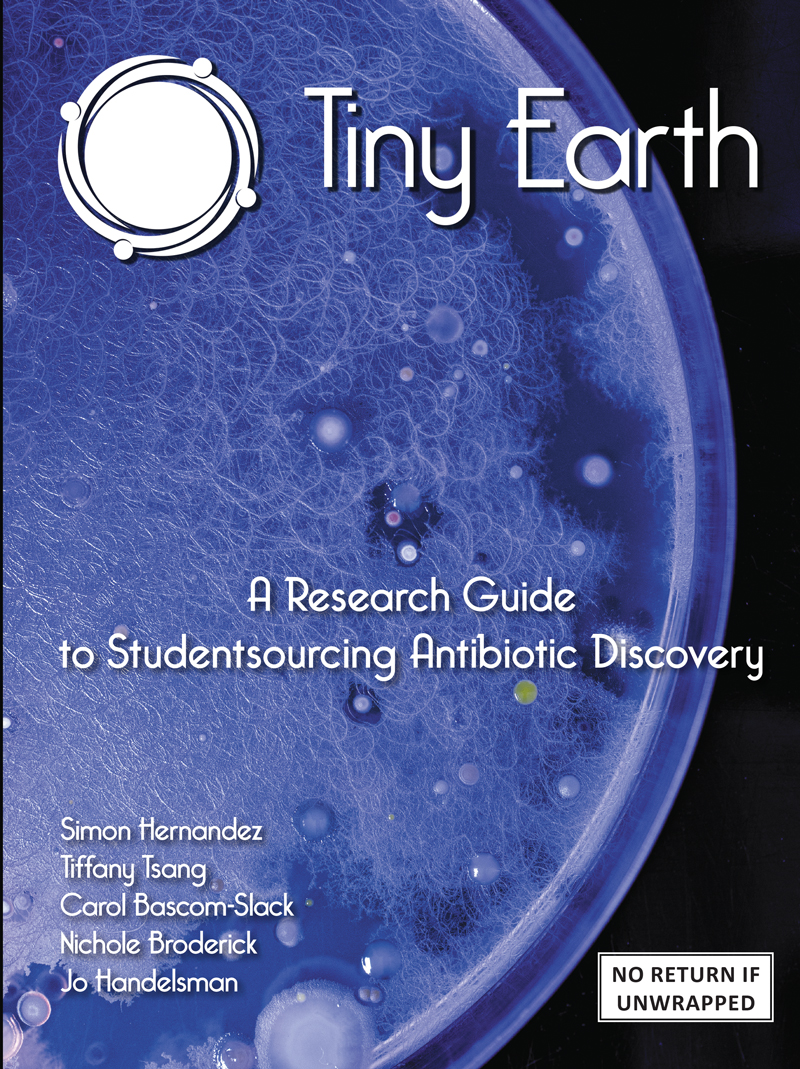
The Tiny Earth Student Research Guide provides an affordable way for students to engage in antibiotic-discovery research. The Research Guide brings together fundamental concepts from soil science, microbiology, and chemistry. Students learn these concepts by designing their own series of experiments, recorded in a traditional lab notebook or in the integrated Tiny Earth Discovery Database. A new edition of the Research Guide is in progress to be released in 2027 based on Scientific Teaching and the hallmarks of course-based undergraduate research experiences (CUREs).
Publications:
Hernandez, S., Tsang, T., Bascom-Slack, C., Broderick, N., & Handelsman, J. (2020). Tiny Earth: A research guide to student sourcing antibiotic discovery. XanEdu, Ann Arbor, MI. ISBN: 978-1-71149-368-8
Hernandez, P. R., Woodcock, A., Estrada, M., & Schultz, P. W. (2018). Undergraduate Research Experiences Broaden Diversity in the Scientific Workforce. BioScience, 68(3), 204-211. doi:10.1093/biosci/bix163
Funding support for the Tiny Earth Student Research Guide comes from:
- Howard Hughes Medical Institute
- The William + Flora Hewlett Foundation
Tiny Earth Chemistry Hub
The Tiny Earth Chemistry Hub (TECH), housed at the Wisconsin Institute for Discovery in Dr. Jo Handelsman’s research lab, advances the antibiotic discovery pipeline through genomic and chemical analysis of student-sourced bioactive bacteria isolated from soil.
TECH’s isolate collection includes over 4,400 bacterial isolates discovered by Tiny Earth students from 34 institutions since 2018. Isolates are evaluated and prioritized based on bioactivity and potential for encoding genes that synthesize antibiotics. Some isolates are scaled up for structural elucidation of bioactive molecules. The variety of soil environments, culture conditions, bioactivity profiles, and bacterial taxa is a rich asset to TECH.
TECH welcomes collaborators in its quest to discover novel antibiotic compounds. Instructors can visit the TEPI Website for more information and instructions on sending isolates to TECH.
Publications:
Ryan, K. T., Duncan, J. M., Thomas, C. S., Chevrette, M. G., DenHartog, M. L., Labby, K. J., Klein, J., & Zamanian, M. (2026). Nematicidal indole oxazoles and chemoattractants from soil bacteria. bioRxiv. https://doi.org/10.64898/2026.01.20.700618
Kashyap, N., Cumsille, A., Saldanha, M., Cediel Becerra, J. D., DenHartog, M., Handelsman, J., & Chevrette, M. (2025). Fueling future antibiotic discovery: An analysis of taxonomic and biosynthetic diversity in antimicrobial-producing soil bacterial isolates. UF Journal of Undergraduate Research, 27. https://doi.org/10.32473/ufjur.27.138789
Hurley, A., Chevrette, M. G., Acharya, D. D., Lozano, G. L., Garavito, M., Heinritz, J., Balderrama, L., Beebe, M., DenHartog, M. L., Corinaldi, K., Engels, R., Gutierrez, A., Jona, O., Putnam, J. H. I., Rhodes, B., Tsang, T., Hernandez, S., Bascom-Slack, C., Blum, J. E., Price P. A., Davis D., Klein, J., Pultorak J., Sullivan N. L., Mouncey N. J., Dorrestein P. C., Miller S., Broderick N. A., & Handelsman, J. (2021). Tiny Earth: A big Idea for STEM education and antibiotic discovery. mBio, 12(1), e03432-20. https://doi.org/10.1128/mBio.03432-20
Chemistry Hub
Students share samples with the Chemistry Hub scientists for genomic and metabolomic analysis.
Antibiotic Structures
Identifying antibiotic compounds to combat the resistance crisis.
Tiny Earth Database
The Tiny Earth Public Database (TEPD) is used for genomic research, classroom studies, and more as students search for discovery patterns and novel compounds. TEPD sources information from the Tiny Earth Discovery Database, a collection of soil samples, culture conditions, and bioactive bacteria that have been isolated by students from all over the world. This rich dataset is critical for discovering new antibiotics. It standardizes record keeping and allows information to be shared with the entire Tiny Earth network, including the Tiny Earth Chemistry Hub.
Funding support for the Tiny Earth Database comes from:
- Wisconsin Institute for Discovery at the University of Wisconsin–Madison
- Chan Zuckerberg Initiative
Past Projects
Tiny Earth Wisconsin Network
The Tiny Earth Wisconsin Network connects Wisconsin students, educators, communities, and industries to accelerate antibiotic discovery. From 2023 to 2025, over 2,000 students, instructors, their families and friends, and community members attended Tiny Earth symposiums in Wisconsin. By training instructors from colleges and universities across Wisconsin to teach Tiny Earth, the Network provides a pathway for Wisconsin students at all types of colleges to experience the reward of scientific research and the opportunity to thrive in science.
Funding support for the Tiny Earth Wisconsin Network comes from:
The Department of Education, Grant Number: P116Z120024
Tiny Earth Enrichment Study
The Tiny Earth Enrichment Study was an online, longitudinal study that aimed to understand and enhance the impact of participating in the Tiny Earth network and find how that participation impacts the quality of peer-mentor relationships among both faculty and students.
Publications:
Estrada, M., Hernandez, P. R., Handelsman, J., Miller, S., Nichole, B., & Patterson, M. (2021). Tiny Earth pivot: Impacts of COVID-19 on faculty mentoring and teaching. Figshare. https://doi.org/10.6084/m9.figshare.13564505
Miller, S., Hernandez, P. R., Du, W., Aldana, C. C., Lee, H., Maldonado, N., Sandoval, P., Vong, J., Young, G., Handelsman, J., Broderick, N. A., & Estrada, M. (2025). Tiny Earth CURE demonstrates equitable benefits for U.S. college science students. CBE-Life Sciences Education, 24(2). https://doi.org/10.1187/cbe.23-06-0117
Miller, S., Hernandez, P. R., Du, W., Aldana, C. A., Lee, H., Maldonado, N., Sandoval, P., Vong, J., Gerald, Y., Handelsman, J., Broderick, N. A., & Estrada, M. (2025). Boosting scientific community values: The impact of social inclusion interventions on biomedical instructors. Journal of Clinical and Translational Science, 9(1), e105. https://doi.org/10.1017/cts.2025.81
Estrada, M., Hernandez, P. R., & Schultz, P. W. (2018). A longitudinal study of how quality mentorship and research experience integrate underrepresented minorities into STEM careers. CBE—Life Sciences Education, 17(1), ar9. https://doi.org/10.1187/cbe.17-04-0066
Du, W., Lee, H., Broderick, N. A., Aldana, C. C., Estrada, M., Handelsman, J., Maldonado, N., Miller, S., Patterson, M., Sandoval, P., & Hernandez, P. R. (2023). Amplifying similarity to promote college STEM instructor-student mentoring relationship quality: A cluster randomized trial. Frontiers in Education, 8. https://doi.org/10.3389/feduc.2023.1293885
Funding support for the Tiny Earth Enrichment Study comes from:
The National Institutes of Health (NIH), Award Number: U54 GM119023
Tiny Earth Summer Research Course
The Tiny Earth Summer Research Course (TESRC) is a full-time, cohort-based, mentored research experience for Tiny Earth students. Designed for two-year college students to conduct research at a university, TESRC provides students scientific and workforce skills to persist in STEM. In 2021-2023, Tiny Earth hosted TESRC in Dr. Jo Handelsman’s lab at the University of Wisconsin–Madison. Three versions of the research experience and recommendations for instructors can be found on the TEPI website.
Funding support for the Tiny Earth Summer Research Course comes from:
The United States Department of Agriculture National Institute of Food and Agriculture, Award Number: 2021-67037-34618