
When Tiny Earth undergraduate student Tasha Miller returned to school after working in pharmacies for years, she pictured herself attending pharmacy school, a goal that promised the ability to provide for her family.
However, Tasha’s attention shifted during her first experience in a microbiology lab at Madison Area Technical College (MATC). The potential for soil bacteria to solve global problems caught her curiosity.
As a mom of four kids and a nontraditional student, Tasha knew she would be taking a risk moving away from the steady life of pharmacy work and into research. But, with the support of family and academic mentors, Tasha decided to follow this new dream.
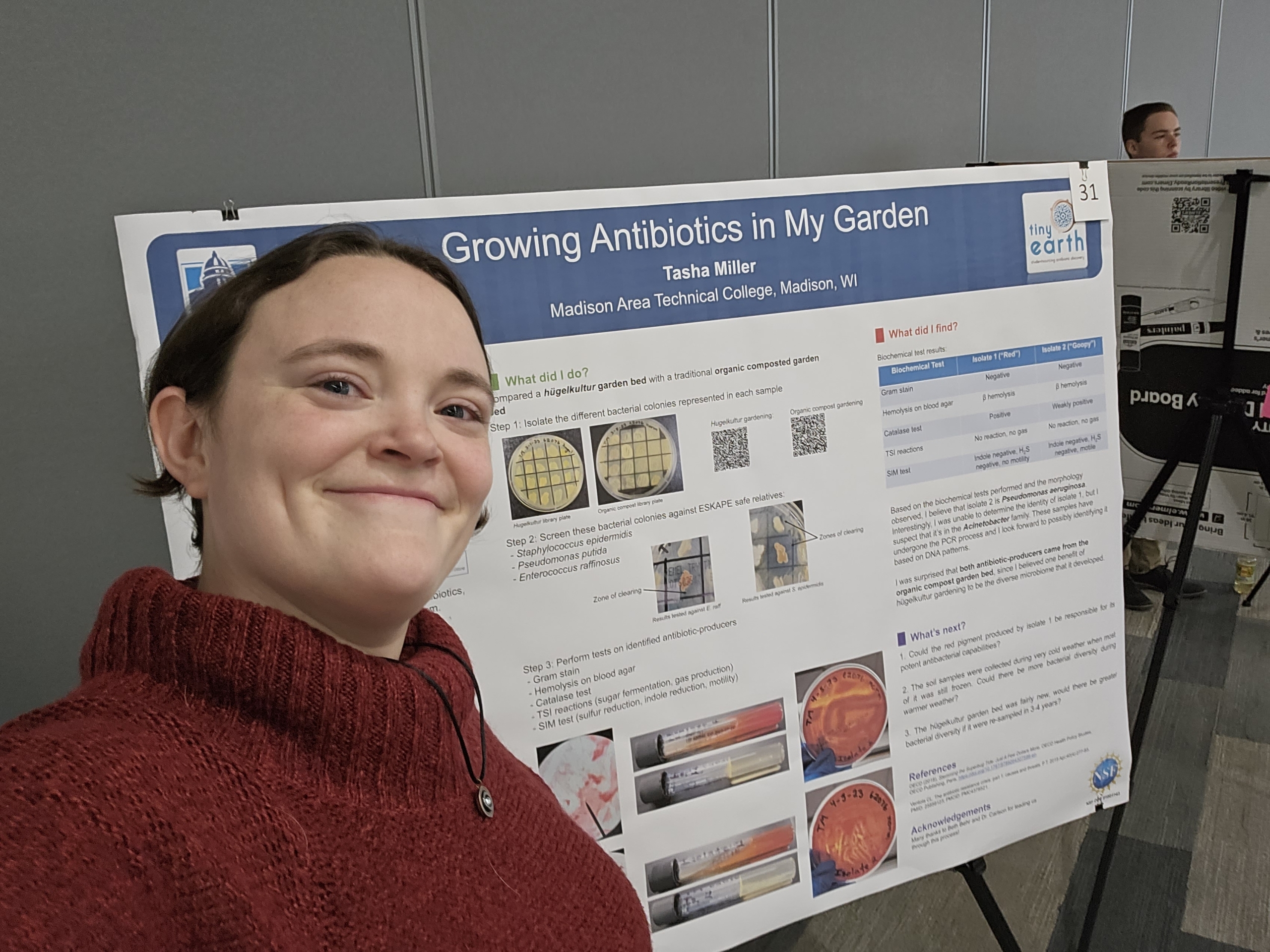
Tasha presented her Tiny Earth course research during her time at Madison Area Technical College.
Women and girls are still severely underrepresented in science. Less than one third of the world’s researchers are women (UNESCO). International Day of Women and Girls in Science on February 11 has become a global effort to ensure the future of women in STEM.
Tasha’s story shows that getting involved in research isn’t easy, but it can start with simple choices.
“Initially, it’s going to take some bravery to get the ball rolling,” Tasha said, “but just start by signing up for classes.”
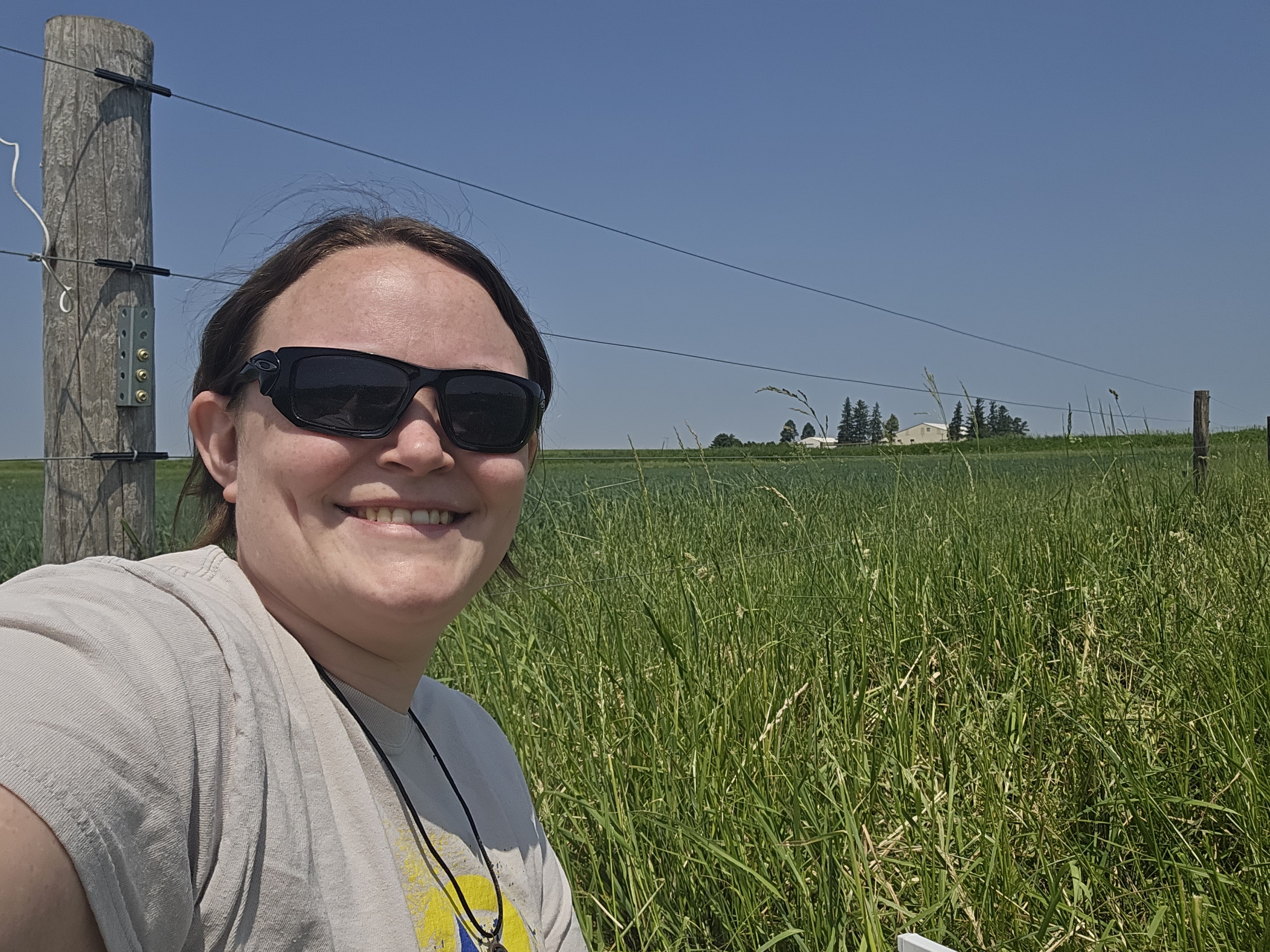
In a field, Tasha collected data samples for her research projects.
A Tiny Earth biology course introduced Tasha to TEPI Kit Carlson (Madison Area Technical College), who later encouraged Tasha to apply for the Tiny Earth Summer Research Course (TESRC), a full-time, mentored research experience in Tiny Earth Founder Jo Handelsman’s lab at the University of Wisconsin–Madison.
“[Carlson] really took me under her wing and lit the fire for plant science,” Tasha said. TESRC gave Tasha more knowledge about higher academia and the options available to her, including the different pathways to a PhD, a new goal Tasha set.
Tasha transferred from MATC to UW–Madison and now works as an undergraduate researcher in the Handelsman Lab, which includes the Tiny Earth Chemistry Hub (TECH), a research arm of Tiny Earth. TECH houses a collection of over 4,400 soil-derived bioactive bacteria isolated by students all over the United States. Tasha studies bacteria from the TECH collection that have bioactivity against a plant pathogen that causes agricultural challenges.
“I love that science is all about discovering things,” Tasha said. “But we get to really dig in and figure out how it’s been working this whole time.”
Research requires balance with classes, family, and other obligations. Tasha has learned to manage her priorities in a way that allows her to truly enjoy research and still have quality time with her family and friends. And that has paid off — Tasha said that her kids always want to hear about her work.
“They get so excited to learn about what I’m doing, and they talk all the time about becoming scientists themselves,” Tasha said. “They push me to keep going and not give up.”
Deep into her undergraduate journey now, Tasha has learned that there’s a “hidden curriculum” to science — a set of social rules that no one offers. Being able to connect with women in the field helps immensely. Tasha’s former professor, her current lab advisor, and her current lab mentor, Delaney Miller, have all helped Tasha succeed in science.
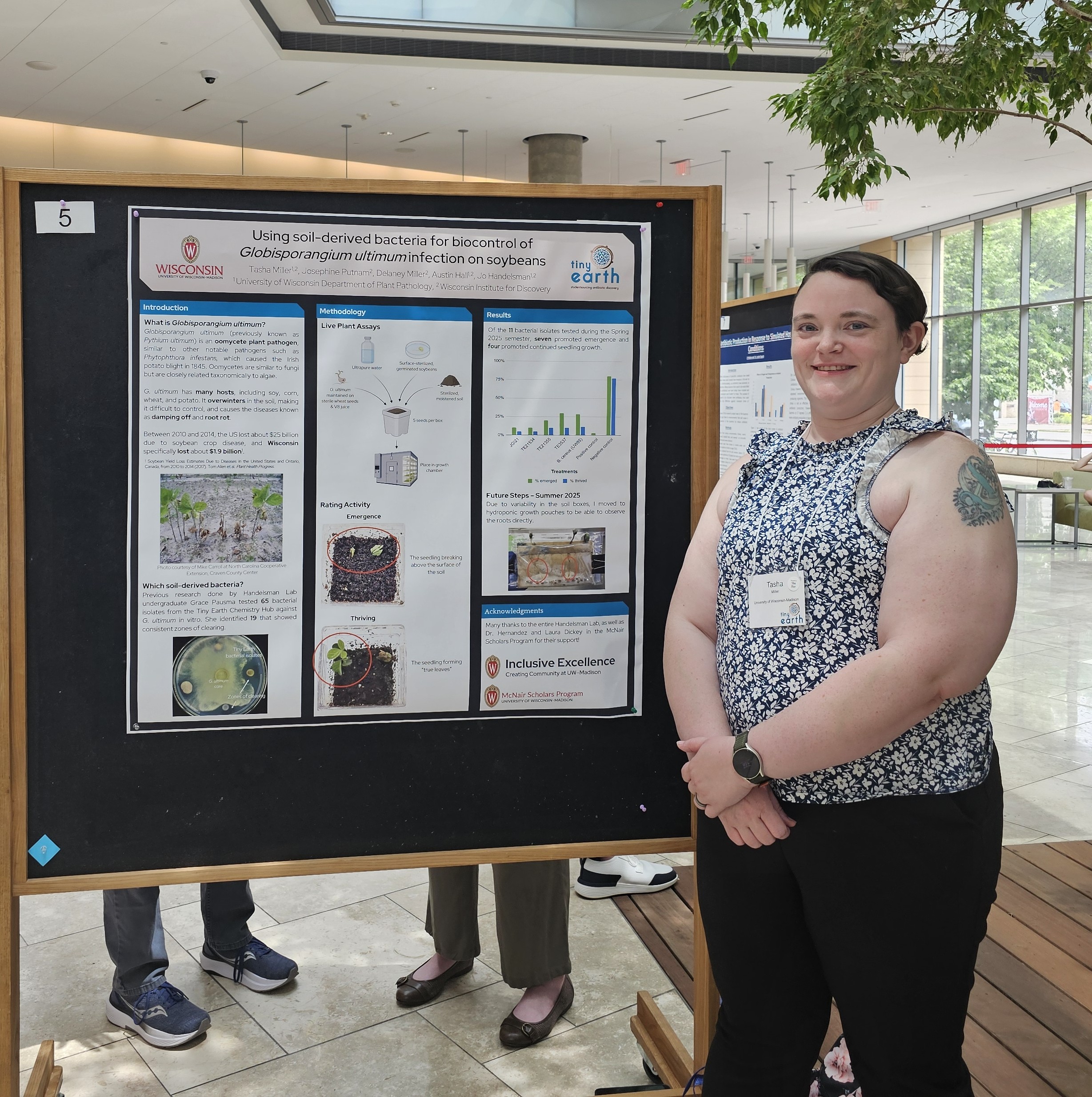
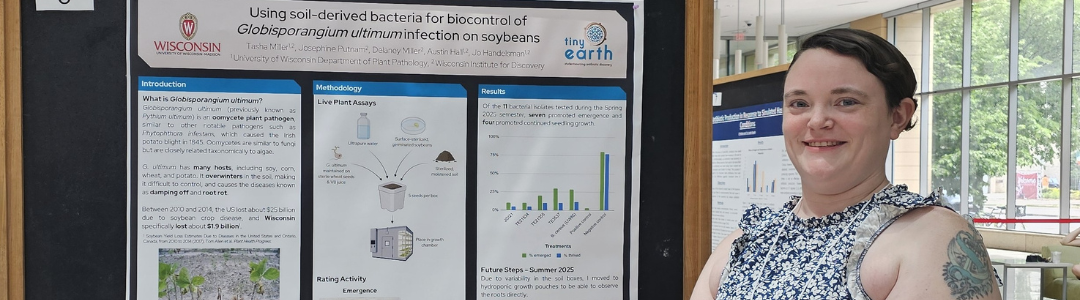
Tasha presented research during her time in the Handelsman Lab during the Tiny Earth Summer Research Course. She chose to research biocontrols for soybeans.
Support like this leads to success, and Tiny Earth is committed to providing support so that more women and girls can feel comfortable and confident in their pursuit of science careers — an outcome that benefits everyone.
By Abigail Bures